Blogs
The Consolidation Hunt: Why Manual Compliance Fails and Exposes Your Firm to Regulatory Risk
Dec 4, 2025
Learn more about the issues with the lack of official, consolidated legislation and how to avoid key issues in fragmented legal frameworks.
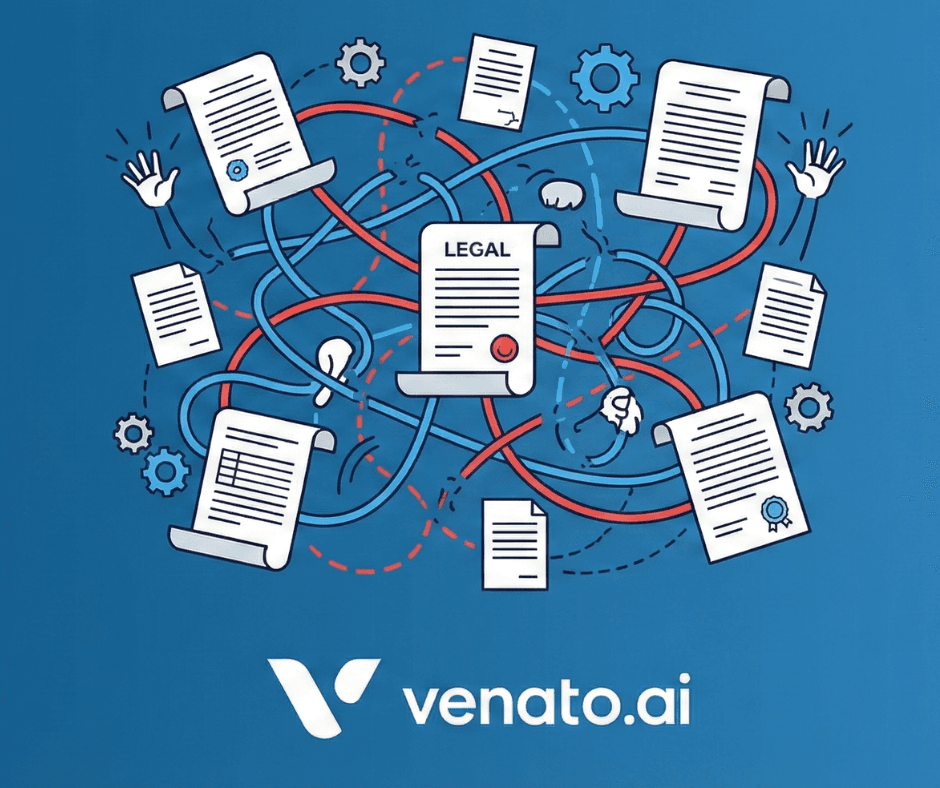
In the UK, the time spent on regulatory compliance has risen from 6 days per month in 2022 to 8 days in 2025. This statistic is mirrored and magnified globally. Consolidated legislation is a single up-to-date version of a law, and currently, the process of finding this legislation is, for most countries, an error-prone, painful process of manually piecing together an original law and its hundreds of separate amendments. When manual tracking forces compliance teams to chase individual amendments, as is common in fragmented systems like Bulgaria’s, it inevitably leads to compliance gaps and audit risk.
We outline how a compliance crisis can occur using Bulgaria as an example and provide the three key threats that a fragmented legal system creates. The solution to these expensive and avoidable issues is citation-based AI, which cuts time, cost, and audit failures.
Anatomy of a Compliance Crisis: The Bulgarian Burden - A Case Study in Legislative Fragmentation
The absence of a single, coherent, and accessible source of regulations creates a compliance crisis, clearly exemplified by Bulgaria. Bulgaria, like many jurisdictions, only publishes original laws and subsequent amendments separately in an official gazette. This means that compliance teams must manually piece together all subsequent amendments to create the current version.
The Organisation for Economic Co-operation and Development (OECD) has defined Bulgaria’s regulatory landscape as ‘not user-friendly’ and ‘too lengthy and complex for daily use’, and is therefore recommending large-scale regulatory reform. This fragmented landscape of regulations can be seen globally and creates serious systemic risk. For example, a law concerning environmental protection may have its original text from 2002, followed by 50 subsequent amendments in the years since, each published as a separate entry in the State Gazette. A compliance officer must locate and cross-reference all 51 documents to determine the current obligation, a task that demands significant expertise and time. This manual process is fundamentally unscalable when monitoring hundreds or thousands of applicable laws.
This fragmentation is compounded by the sheer volume of legislative activity. In some jurisdictions, the rate of new amendments and regulations can make manual tracking an exercise in futility, as the consolidated text is obsolete the moment a new amendment is finalised. EU LEX, the official journal of the EU, has noted that firms must dedicate an increasing amount of resources to monitoring a constantly expanding and evolving regulatory framework, often resorting to costly local external counsel. The EU has also commented that Bulgaria’s official platform publishes laws in the way they have been voted, meaning it consists “mainly of editions and corrections of the official documents, and not of the full texts of actual laws in Bulgaria”. This is a system created for legislators, not compliance teams.
In fact, the National Assembly of the Republic of Bulgaria, the body that publishes the official State Gazette, acknowledges that it provides no official consolidation or official legislative database for consolidated texts, leaving this crucial function to private companies. This fragmented legal landscape allows companies to be vulnerable to too many threats, which often leads to a complete compliance crisis.
The Triple Threat of Manual Consolidation
Three main threats of manual consolidation that stand out are errors, delays, and audit failures, which pose an existential risk to a company’s regulatory standing.
Error: Missing an Amendment to a Law or Misinterpreting its Effect
The core failure of manual consolidation is the high probability of human error. This error can manifest in two critical ways:
Omission: an amendment is missed in its entirety, perhaps because it is published in an obscure section of the official gazette, or the responsible person was simply overloaded. Missing a substantive change in financial, environmental, or data privacy law can lead to immediate non-compliance and massive fines.
Misinterpretation: Even when an amendment is found, correctly understanding its impact on the original legal text is essential. Legislative language is often dense and relies on specific legal jargon. Manually applying these specific and confusing instructions across a large document is a recipe for error, leading to a flawed internal consolidated version and incorrect compliance decisions.
Delay: The Time it takes for a Lawyer/Consultant to Manually Consolidate and Draft an Internal Summary of a Piece of Legislation.
Compliance should be a real-time function. However, the manual consolidation process creates a substantial delay between when a law or amendment is officially published and when the firm’s compliance team can internally update their polices and procedures.
This lag is composed of several time-consuming steps:
Discovery and Retrieval: Locating the official publication, for example, the specific issue of the Bulgarian State Gazette.
Manual Consolidation: The hands-on work of physically merging the text of the amendment into the base law.
Internal Summary and Dissemination: The drafting of a plain language summary of the consolidated text and its impact on the firm.
In high-velocity regulatory environments, such as those governing cryptocurrency or foreign investment, a delay of even a few days can mean a firm operates under an outdated and illegal standard.
Audit failure: The Inability to Instantly Prove Legal Basis
The modern regulatory audit goes beyond simply being compliant; it’s about being able to prove the decision instantly and with proof.
In a manual system, this involves:
Retrieving the internal version of the consolidated text uses
Manually locating the original official gazette entries for every amendment
Reconciling the internal text with the official sources to defend its accuracy
This process is slow, expensive, and often reveals inconsistencies, weakening the firm’s defense. Venato’s strength lies in providing a single, verified source of truth, ready for audit defense.
From fragment to fact: How AI solves the Consolidation Problem
AI is uniquely suited to automate compliance. Machine learning models identify the base law, dissect all amendments, and algorithmically add them to a single project timeline. This is a fundamental technical capability beyond simple keyword searching.
Automate Compliance Tracking
The core of AI-powered compliance is that it eliminates the human effort and error inherent in manual cut-and-paste. Venato’s real-time web scraping tracks a legislation’s amendments onto a timeline, and outlines what these changes mean for you. This timeline is tailored to your project/company's requirements, outlining all applicable deadlines, mandates, and necessary applications. The result is a machine-generated, verifiable, legislative timeline that can be generated within seconds of the amendment’s official publication. This effectively shrinks the compliance delay window from weeks to minutes.
Dynamic Version Control
Instead of a static PDF produced by a manual consultant, an AI-driven legislative tracking platform provides dynamic version control. Every single change to a law is tracked, timestamped, and linked directly to its official source publication. Therefore, the resulting legislative timeline is not a private, unverified document, but a single record where every change is recorded. This capability directly addresses the audit failure threat, turning a compliance defense from a scramble into a seamless retrieval of facts
Proactive Impact Analysis and Summary Generation
Beyond legislative tracking, AI provides immediate impact analysis. Using techniques such as abstractive summarisation, the system can instantly generate a summary of the latest amendment, detailing what changed and how it affects previous texts. Venato turns dense legislative text into clear, verifiable action plans tailored to firms’ specific needs.
By leveraging AI, Venato transforms fragmented legal texts into actionable, verifiable intelligence, mitigating the triple threat of error, delay, and audit failure that plagues firms operating in jurisdictions like Bulgaria and globally.
Call for action
To encapsulate, the ‘consolidation hunt’ - the painful and manual process of tracking and documenting all amendments of a piece of legislation - is no longer sustainable in a world of accelerating regulatory change. It introduces intolerable levels of errors, expensive delays, and avoidable audit failures. The legislative nightmare of today’s fragmented legal landscape can only be mitigated by technology, which provides a viable path to safety and compliance.
Ready to move beyond compliance crises? Request a demo today to see how Venato instantly generates coherent, audit-ready timelines with direct links to official sources in fragmented jurisdictions, providing an indisputable line of evidence.
In the UK, the time spent on regulatory compliance has risen from 6 days per month in 2022 to 8 days in 2025. This statistic is mirrored and magnified globally. Consolidated legislation is a single up-to-date version of a law, and currently, the process of finding this legislation is, for most countries, an error-prone, painful process of manually piecing together an original law and its hundreds of separate amendments. When manual tracking forces compliance teams to chase individual amendments, as is common in fragmented systems like Bulgaria’s, it inevitably leads to compliance gaps and audit risk.
We outline how a compliance crisis can occur using Bulgaria as an example and provide the three key threats that a fragmented legal system creates. The solution to these expensive and avoidable issues is citation-based AI, which cuts time, cost, and audit failures.
Anatomy of a Compliance Crisis: The Bulgarian Burden - A Case Study in Legislative Fragmentation
The absence of a single, coherent, and accessible source of regulations creates a compliance crisis, clearly exemplified by Bulgaria. Bulgaria, like many jurisdictions, only publishes original laws and subsequent amendments separately in an official gazette. This means that compliance teams must manually piece together all subsequent amendments to create the current version.
The Organisation for Economic Co-operation and Development (OECD) has defined Bulgaria’s regulatory landscape as ‘not user-friendly’ and ‘too lengthy and complex for daily use’, and is therefore recommending large-scale regulatory reform. This fragmented landscape of regulations can be seen globally and creates serious systemic risk. For example, a law concerning environmental protection may have its original text from 2002, followed by 50 subsequent amendments in the years since, each published as a separate entry in the State Gazette. A compliance officer must locate and cross-reference all 51 documents to determine the current obligation, a task that demands significant expertise and time. This manual process is fundamentally unscalable when monitoring hundreds or thousands of applicable laws.
This fragmentation is compounded by the sheer volume of legislative activity. In some jurisdictions, the rate of new amendments and regulations can make manual tracking an exercise in futility, as the consolidated text is obsolete the moment a new amendment is finalised. EU LEX, the official journal of the EU, has noted that firms must dedicate an increasing amount of resources to monitoring a constantly expanding and evolving regulatory framework, often resorting to costly local external counsel. The EU has also commented that Bulgaria’s official platform publishes laws in the way they have been voted, meaning it consists “mainly of editions and corrections of the official documents, and not of the full texts of actual laws in Bulgaria”. This is a system created for legislators, not compliance teams.
In fact, the National Assembly of the Republic of Bulgaria, the body that publishes the official State Gazette, acknowledges that it provides no official consolidation or official legislative database for consolidated texts, leaving this crucial function to private companies. This fragmented legal landscape allows companies to be vulnerable to too many threats, which often leads to a complete compliance crisis.
The Triple Threat of Manual Consolidation
Three main threats of manual consolidation that stand out are errors, delays, and audit failures, which pose an existential risk to a company’s regulatory standing.
Error: Missing an Amendment to a Law or Misinterpreting its Effect
The core failure of manual consolidation is the high probability of human error. This error can manifest in two critical ways:
Omission: an amendment is missed in its entirety, perhaps because it is published in an obscure section of the official gazette, or the responsible person was simply overloaded. Missing a substantive change in financial, environmental, or data privacy law can lead to immediate non-compliance and massive fines.
Misinterpretation: Even when an amendment is found, correctly understanding its impact on the original legal text is essential. Legislative language is often dense and relies on specific legal jargon. Manually applying these specific and confusing instructions across a large document is a recipe for error, leading to a flawed internal consolidated version and incorrect compliance decisions.
Delay: The Time it takes for a Lawyer/Consultant to Manually Consolidate and Draft an Internal Summary of a Piece of Legislation.
Compliance should be a real-time function. However, the manual consolidation process creates a substantial delay between when a law or amendment is officially published and when the firm’s compliance team can internally update their polices and procedures.
This lag is composed of several time-consuming steps:
Discovery and Retrieval: Locating the official publication, for example, the specific issue of the Bulgarian State Gazette.
Manual Consolidation: The hands-on work of physically merging the text of the amendment into the base law.
Internal Summary and Dissemination: The drafting of a plain language summary of the consolidated text and its impact on the firm.
In high-velocity regulatory environments, such as those governing cryptocurrency or foreign investment, a delay of even a few days can mean a firm operates under an outdated and illegal standard.
Audit failure: The Inability to Instantly Prove Legal Basis
The modern regulatory audit goes beyond simply being compliant; it’s about being able to prove the decision instantly and with proof.
In a manual system, this involves:
Retrieving the internal version of the consolidated text uses
Manually locating the original official gazette entries for every amendment
Reconciling the internal text with the official sources to defend its accuracy
This process is slow, expensive, and often reveals inconsistencies, weakening the firm’s defense. Venato’s strength lies in providing a single, verified source of truth, ready for audit defense.
From fragment to fact: How AI solves the Consolidation Problem
AI is uniquely suited to automate compliance. Machine learning models identify the base law, dissect all amendments, and algorithmically add them to a single project timeline. This is a fundamental technical capability beyond simple keyword searching.
Automate Compliance Tracking
The core of AI-powered compliance is that it eliminates the human effort and error inherent in manual cut-and-paste. Venato’s real-time web scraping tracks a legislation’s amendments onto a timeline, and outlines what these changes mean for you. This timeline is tailored to your project/company's requirements, outlining all applicable deadlines, mandates, and necessary applications. The result is a machine-generated, verifiable, legislative timeline that can be generated within seconds of the amendment’s official publication. This effectively shrinks the compliance delay window from weeks to minutes.
Dynamic Version Control
Instead of a static PDF produced by a manual consultant, an AI-driven legislative tracking platform provides dynamic version control. Every single change to a law is tracked, timestamped, and linked directly to its official source publication. Therefore, the resulting legislative timeline is not a private, unverified document, but a single record where every change is recorded. This capability directly addresses the audit failure threat, turning a compliance defense from a scramble into a seamless retrieval of facts
Proactive Impact Analysis and Summary Generation
Beyond legislative tracking, AI provides immediate impact analysis. Using techniques such as abstractive summarisation, the system can instantly generate a summary of the latest amendment, detailing what changed and how it affects previous texts. Venato turns dense legislative text into clear, verifiable action plans tailored to firms’ specific needs.
By leveraging AI, Venato transforms fragmented legal texts into actionable, verifiable intelligence, mitigating the triple threat of error, delay, and audit failure that plagues firms operating in jurisdictions like Bulgaria and globally.
Call for action
To encapsulate, the ‘consolidation hunt’ - the painful and manual process of tracking and documenting all amendments of a piece of legislation - is no longer sustainable in a world of accelerating regulatory change. It introduces intolerable levels of errors, expensive delays, and avoidable audit failures. The legislative nightmare of today’s fragmented legal landscape can only be mitigated by technology, which provides a viable path to safety and compliance.
Ready to move beyond compliance crises? Request a demo today to see how Venato instantly generates coherent, audit-ready timelines with direct links to official sources in fragmented jurisdictions, providing an indisputable line of evidence.
In the UK, the time spent on regulatory compliance has risen from 6 days per month in 2022 to 8 days in 2025. This statistic is mirrored and magnified globally. Consolidated legislation is a single up-to-date version of a law, and currently, the process of finding this legislation is, for most countries, an error-prone, painful process of manually piecing together an original law and its hundreds of separate amendments. When manual tracking forces compliance teams to chase individual amendments, as is common in fragmented systems like Bulgaria’s, it inevitably leads to compliance gaps and audit risk.
We outline how a compliance crisis can occur using Bulgaria as an example and provide the three key threats that a fragmented legal system creates. The solution to these expensive and avoidable issues is citation-based AI, which cuts time, cost, and audit failures.
Anatomy of a Compliance Crisis: The Bulgarian Burden - A Case Study in Legislative Fragmentation
The absence of a single, coherent, and accessible source of regulations creates a compliance crisis, clearly exemplified by Bulgaria. Bulgaria, like many jurisdictions, only publishes original laws and subsequent amendments separately in an official gazette. This means that compliance teams must manually piece together all subsequent amendments to create the current version.
The Organisation for Economic Co-operation and Development (OECD) has defined Bulgaria’s regulatory landscape as ‘not user-friendly’ and ‘too lengthy and complex for daily use’, and is therefore recommending large-scale regulatory reform. This fragmented landscape of regulations can be seen globally and creates serious systemic risk. For example, a law concerning environmental protection may have its original text from 2002, followed by 50 subsequent amendments in the years since, each published as a separate entry in the State Gazette. A compliance officer must locate and cross-reference all 51 documents to determine the current obligation, a task that demands significant expertise and time. This manual process is fundamentally unscalable when monitoring hundreds or thousands of applicable laws.
This fragmentation is compounded by the sheer volume of legislative activity. In some jurisdictions, the rate of new amendments and regulations can make manual tracking an exercise in futility, as the consolidated text is obsolete the moment a new amendment is finalised. EU LEX, the official journal of the EU, has noted that firms must dedicate an increasing amount of resources to monitoring a constantly expanding and evolving regulatory framework, often resorting to costly local external counsel. The EU has also commented that Bulgaria’s official platform publishes laws in the way they have been voted, meaning it consists “mainly of editions and corrections of the official documents, and not of the full texts of actual laws in Bulgaria”. This is a system created for legislators, not compliance teams.
In fact, the National Assembly of the Republic of Bulgaria, the body that publishes the official State Gazette, acknowledges that it provides no official consolidation or official legislative database for consolidated texts, leaving this crucial function to private companies. This fragmented legal landscape allows companies to be vulnerable to too many threats, which often leads to a complete compliance crisis.
The Triple Threat of Manual Consolidation
Three main threats of manual consolidation that stand out are errors, delays, and audit failures, which pose an existential risk to a company’s regulatory standing.
Error: Missing an Amendment to a Law or Misinterpreting its Effect
The core failure of manual consolidation is the high probability of human error. This error can manifest in two critical ways:
Omission: an amendment is missed in its entirety, perhaps because it is published in an obscure section of the official gazette, or the responsible person was simply overloaded. Missing a substantive change in financial, environmental, or data privacy law can lead to immediate non-compliance and massive fines.
Misinterpretation: Even when an amendment is found, correctly understanding its impact on the original legal text is essential. Legislative language is often dense and relies on specific legal jargon. Manually applying these specific and confusing instructions across a large document is a recipe for error, leading to a flawed internal consolidated version and incorrect compliance decisions.
Delay: The Time it takes for a Lawyer/Consultant to Manually Consolidate and Draft an Internal Summary of a Piece of Legislation.
Compliance should be a real-time function. However, the manual consolidation process creates a substantial delay between when a law or amendment is officially published and when the firm’s compliance team can internally update their polices and procedures.
This lag is composed of several time-consuming steps:
Discovery and Retrieval: Locating the official publication, for example, the specific issue of the Bulgarian State Gazette.
Manual Consolidation: The hands-on work of physically merging the text of the amendment into the base law.
Internal Summary and Dissemination: The drafting of a plain language summary of the consolidated text and its impact on the firm.
In high-velocity regulatory environments, such as those governing cryptocurrency or foreign investment, a delay of even a few days can mean a firm operates under an outdated and illegal standard.
Audit failure: The Inability to Instantly Prove Legal Basis
The modern regulatory audit goes beyond simply being compliant; it’s about being able to prove the decision instantly and with proof.
In a manual system, this involves:
Retrieving the internal version of the consolidated text uses
Manually locating the original official gazette entries for every amendment
Reconciling the internal text with the official sources to defend its accuracy
This process is slow, expensive, and often reveals inconsistencies, weakening the firm’s defense. Venato’s strength lies in providing a single, verified source of truth, ready for audit defense.
From fragment to fact: How AI solves the Consolidation Problem
AI is uniquely suited to automate compliance. Machine learning models identify the base law, dissect all amendments, and algorithmically add them to a single project timeline. This is a fundamental technical capability beyond simple keyword searching.
Automate Compliance Tracking
The core of AI-powered compliance is that it eliminates the human effort and error inherent in manual cut-and-paste. Venato’s real-time web scraping tracks a legislation’s amendments onto a timeline, and outlines what these changes mean for you. This timeline is tailored to your project/company's requirements, outlining all applicable deadlines, mandates, and necessary applications. The result is a machine-generated, verifiable, legislative timeline that can be generated within seconds of the amendment’s official publication. This effectively shrinks the compliance delay window from weeks to minutes.
Dynamic Version Control
Instead of a static PDF produced by a manual consultant, an AI-driven legislative tracking platform provides dynamic version control. Every single change to a law is tracked, timestamped, and linked directly to its official source publication. Therefore, the resulting legislative timeline is not a private, unverified document, but a single record where every change is recorded. This capability directly addresses the audit failure threat, turning a compliance defense from a scramble into a seamless retrieval of facts
Proactive Impact Analysis and Summary Generation
Beyond legislative tracking, AI provides immediate impact analysis. Using techniques such as abstractive summarisation, the system can instantly generate a summary of the latest amendment, detailing what changed and how it affects previous texts. Venato turns dense legislative text into clear, verifiable action plans tailored to firms’ specific needs.
By leveraging AI, Venato transforms fragmented legal texts into actionable, verifiable intelligence, mitigating the triple threat of error, delay, and audit failure that plagues firms operating in jurisdictions like Bulgaria and globally.
Call for action
To encapsulate, the ‘consolidation hunt’ - the painful and manual process of tracking and documenting all amendments of a piece of legislation - is no longer sustainable in a world of accelerating regulatory change. It introduces intolerable levels of errors, expensive delays, and avoidable audit failures. The legislative nightmare of today’s fragmented legal landscape can only be mitigated by technology, which provides a viable path to safety and compliance.
Ready to move beyond compliance crises? Request a demo today to see how Venato instantly generates coherent, audit-ready timelines with direct links to official sources in fragmented jurisdictions, providing an indisputable line of evidence.

Centralize & Simplify Regulatory Change Management
Centralize & Simplify Regulatory Change Management
Centralize & Simplify Regulatory Change Management